2026 gives us the opportunity to witness a total solar eclipse from our own lands, something that has not happened for more than 100 years. Let no one be mistaken: it has nothing to do with the partial eclipses or the annular one we have been able to observe in recent years. A total eclipse is an incomparable event.
It will not be an easy eclipse to observe, as totality will occur just a few minutes before sunset, although as a counterpart it may offer us the chance to capture truly memorable images. From here we want to provide you with the basic information about the eclipse and how to observe it. You can visit this page, will be continuously updated, adding the information that we see people request the most.

Although it will be visible from the entire province, there are three things that must always be kept in mind:
- Height of the Sun during totality. Barely 5° above the western horizon
- Castellón is a province with very mountainous geography.
- Weather conditions: August 12 is a date very prone to thunderstorms…
Keep especially points 1 and 2 in mind (there is little that can be done about point 3). Five degrees above the horizon is very low, and any small rise, a tree, a wall… can hide the Sun during totality, precisely the most important moment. It is a very short time, yet it is the fundamental event. The partial phase has its interest, but it is still similar to other partial eclipses. What you must be able to observe is totality. And do not be misled: it has absolutely nothing to do with the partial phase (even when 99% of the Sun is covered), nor with watching it on video, even if it is live.
This is a recommendation that anyone who has seen other total eclipses will give you: you have to see it live. And truly watch it. If you are going to try to photograph it, make it as automatic as possible, or you will simply miss the spectacle.
Where to watch it?
We insist: the Sun will be very low. Look for a place with a VERY clear western horizon, free of obstacles. If possible, choose a spot slightly higher than the surroundings; this will also allow you to try to observe phenomena such as shadow bands.
How to observe the partial phase?
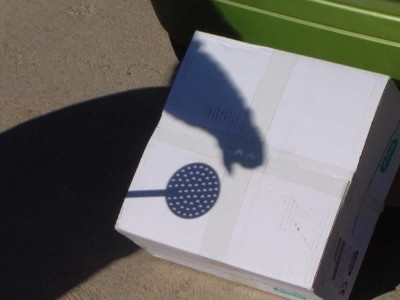
The partial phase requires the use of filtering systems: special eclipse glasses, welding filters (but be careful, not just any will do — minimum shade #14), or projection systems. A simple pinhole camera, which you can build with a cardboard box, would be more than sufficient. Even simpler: a piece of cardboard with holes or a kitchen skimmer. This is the phase during which you must be cautious: the Sun emits a lot of light, and even when it is largely covered it can damage your eyes. And retinal damage is permanent. For more information, visit the sections that we will be publishing in our digital magazine.
How to observe totality?
At the moment of totality, forget about filters. When the Moon is about to completely cover the solar disk, phenomena will begin to appear that can only be seen with the naked eye, without any filtering. On one hand, the “diamond ring” with the “Baily’s beads” will appear. The solar corona will become visible, there will be a significant drop in ambient light, and the brightest stars may be seen. We will publish a post (here) explaining in more detail everything you may be able to observe.
More information in the corresponding section of our website.